
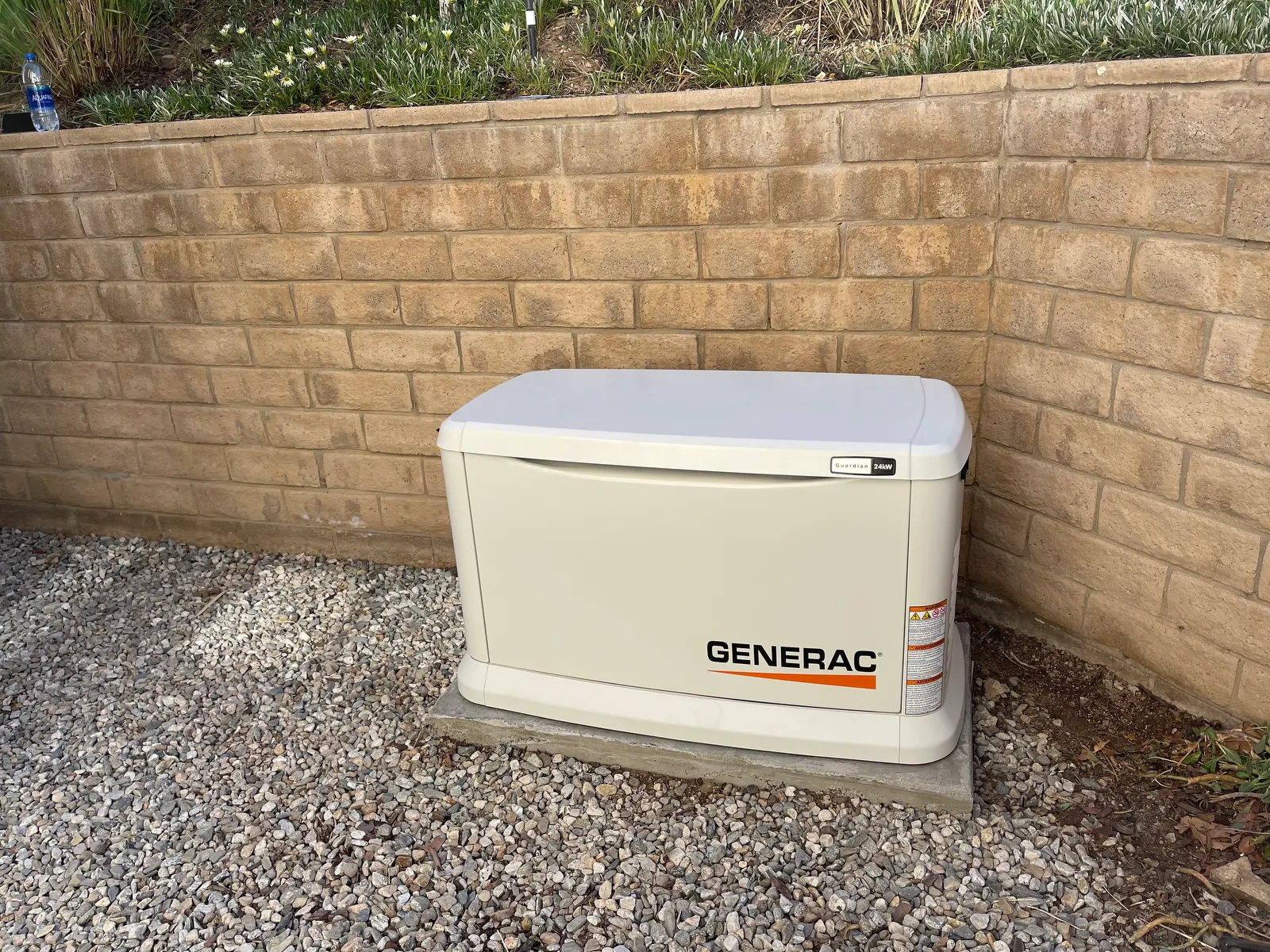
To size your whole house generator, we’ll calculate your home’s total power demand by adding up running watts from necessary circuits and the highest starting wattage from motor-driven appliances. We multiply each circuit’s amperage by voltage (typically 120V or 240V), then add a 20-25% safety margin to account for voltage drop and future needs. This calculation determines whether you’ll need a 10-12 kW unit for critical loads only or a 22-48 kW generator for complete coverage. The sections below provide detailed worksheets and code-compliant methods for precise sizing.
Calculate Your Home’s Total Power Requirements
Before selecting a generator, you’ll need to calculate the total electrical load your home requires during an outage. We determine this by identifying all circuits and loads you intend to power simultaneously.
Proper generator sizing begins with calculating your home’s total electrical load by identifying which circuits and appliances you’ll operate simultaneously during an outage.
Start by reviewing your electrical panel’s circuit directory. Document each circuit’s amperage rating and connected loads. For motor-driven appliances like HVAC systems, well pumps, and refrigerators, we must account for starting watts—typically 2-3 times the running wattage. This surge demand often dictates minimum generator capacity.
Calculate running watts by multiplying voltage times amperage for each circuit. Sum these values, then add the highest surge requirement from any single motor load. Don’t simply total your panel’s breaker ratings—this creates significant oversizing.
Essential loads typically include heating/cooling systems, refrigeration, lighting circuits, well pumps, and critical medical equipment. We recommend prioritizing circuits rather than attempting to power everything simultaneously. This approach optimizes generator sizing while maintaining code-compliant electrical safety margins and ensuring reliable backup power delivery.
Identify Essential Circuits and Appliances
When determining which circuits deserve generator backup, we must distinguish between truly indispensable loads and mere conveniences. Start by categorizing electrical systems into three tiers: critical, necessary, and non-essential.
Critical loads include refrigeration units, medical equipment, sump pumps, and heating systems in cold climates. These directly impact safety and property protection. Necessary loads encompass lighting circuits, well pumps, communication devices, and cooking appliances that maintain reasonable living conditions during extended outages.
Document each circuit’s amperage from your electrical panel’s breaker labels. We’ll multiply amperage by voltage (typically 120V or 240V) to calculate wattage. Account for startup surge—motors require 2-3 times their running wattage initially.
Create a load calculation worksheet listing each necessary circuit with its continuous and surge requirements. This documented approach confirms we’re not oversizing the generator while maintaining adequate capacity for simultaneous operation of priority systems during transfer switching.
Understand Generator Capacity Ratings and Specifications
Generator manufacturers express output capacity in several distinct ratings that serve different purposes, and we must understand each specification to match equipment correctly to our calculated loads.
Vital capacity specifications include:
- Running watts (continuous power) – The sustained output the generator delivers indefinitely under normal operating conditions
- Starting watts (surge power) – The temporary peak capacity available for 3-10 seconds to handle motor startup inrush currents
- Standby rating – Maximum output at variable loads with unlimited runtime, typically 10% below prime rating
- Prime rating – Maximum continuous output with occasional overload capacity, suitable for utility-replacement applications
We’ll find standby-rated generators appropriate for residential backup systems since they’re designed for variable loading conditions. The unit must provide adequate running watts for simultaneous operation of crucial loads while maintaining sufficient surge capacity for the highest inrush demand. We should verify ratings at our site’s elevation and ambient temperature, as manufacturers derate output under adverse conditions per NFPA 110 and EGSA standards.
Account for Starting Wattage Vs Running Wattage
Electric motors consume substantially more power during their initial 3-10 second startup period than during normal operation, creating inrush currents that typically range from 2 to 7 times the running wattage depending on motor type and load characteristics.
We must calculate peak demand by identifying which motor-driven loads will start simultaneously. Central air conditioners, well pumps, and sump pumps present the highest starting surge requirements. We’ll use locked rotor amperage (LRA) from equipment nameplates to determine precise starting watts, converting using the formula: Watts = Volts × LRA × Power Factor.
For sizing accuracy, we add the highest single motor starting wattage to the running wattage of all other simultaneously operating loads. This methodology prevents voltage sag and generator overload during startup events.
Soft-start devices and load-shedding modules can reduce starting surge requirements by 50-70%, allowing us to select smaller generator capacity while maintaining system reliability and equipment protection.
Select the Right Generator Size for Your Home
Armed with our total running wattage and peak starting load calculations, we’re ready to match these requirements to specific generator capacities that meet National Electrical Code Article 702 standards.
We’ll add a 20-25% safety margin to our peak load calculation to account for voltage drop, altitude derating, and future electrical expansion. This margin guarantees compliance with NEC 702.5 regarding adequate capacity.
Consider these generator size ranges based on typical residential applications:
- 10-12 kW: Crucial circuits only (refrigeration, lighting, critical outlets)
- 14-20 kW: Partial home coverage including HVAC or well pump
- 22-26 kW: Full home coverage excluding simultaneous operation of all high-draw appliances
- 30-48 kW: Complete whole-house backup with concurrent operation of all loads
We must verify our selected generator’s continuous power rating exceeds our calculated running wattage, while its surge rating handles our peak starting demand. Always consult manufacturer specifications for exact ratings at our installation altitude and ambient temperature.
FAQs
How Much Does Professional Installation of a Whole House Generator Cost?
We’ll budget $3,000–$5,000 for professional installation—a critical investment that guarantees code-compliant transfer switch integration, proper electrical load calculations, and fuel line connections that’ll keep your system running safely when the grid goes dark.
What Maintenance Schedule Is Required to Keep the Generator Running Properly?
We’ll need to perform oil changes every 100 hours or annually, replace air filters semi-annually, test the unit monthly under load, and schedule professional inspections yearly to guarantee code compliance and ideal performance.
Do I Need Permits to Install a Whole House Generator?
Yes, you’ll need permits for your generator installation. We must secure electrical and building permits, schedule inspections, and guarantee compliance with local codes, setback requirements, and noise ordinances before beginning work.
How Long Can a Whole House Generator Run Continuously?
A properly maintained whole house generator can run continuously for several weeks, though we recommend scheduling periodic cool-down breaks every 24-48 hours to check fluid levels, inspect connections, and guarantee all systems remain within ideal operating parameters.
What Fuel Type Is Most Cost-Effective for Whole House Generators?
Natural gas typically offers the lowest operating cost for whole house generators due to consistent utility pricing and unlimited supply. We’ll find propane costs more but provides grid independence, while diesel offers highest efficiency but requires delivery and storage.

